

Virtual Therapy for Tweens & Teens Across Texas
Support for anxiety, big emotions, and neurodivergent kids using creative, engaging approaches right from home.
When Your Child is Struggling, It Can Feel Overwhelming.
Maybe your tween or teen is:
feeling anxious, worried, or on edge
shutting down or not wanting to talk
having big emotions or frequent meltdowns
overwhelmed at school or socially
struggling with focus, motivation, or confidence
And maybe you’ve tried talking, but it turns into frustration—or silence.
You’re not alone. And your child isn’t broken.
4.8 stars on Google
“The therapists here are patients, experienced, and kind. The whole team goes above and beyond.”
— Client at Reach Counseling“They’ve helped our family grow stronger. We feel heard and supported.”
— Another Happy Family“Carrie has done an amazing job helping children with differences like autism, ADHD, and socialization. She is compassionate and caring and always professional.”
— A Trusted Colleague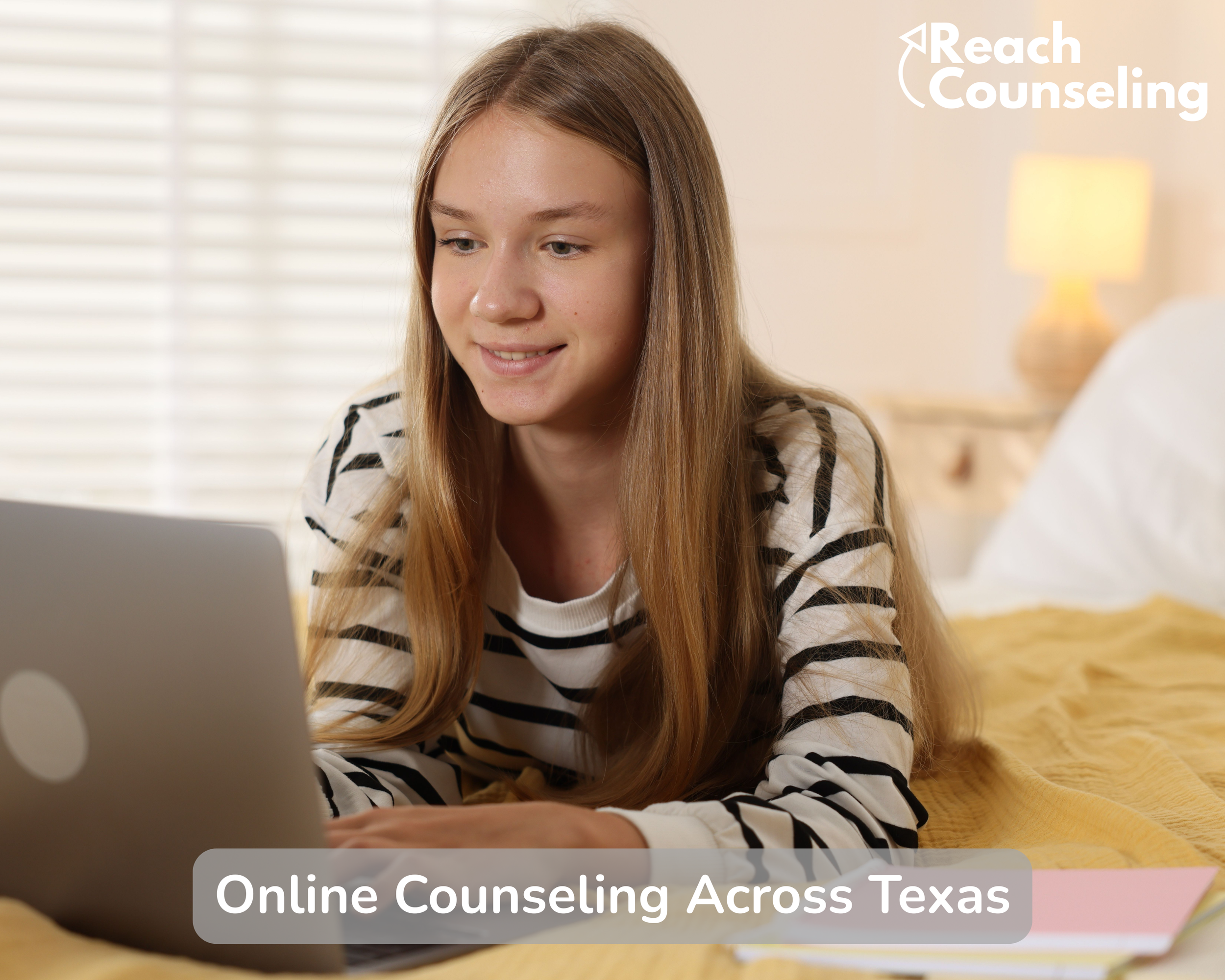
Online Therapy That Meets Your Child Where They Are And Helps Them Open Up
We offer virtual therapy for tweens and teens across Texas, making it easier for your child to get support—without long drives, waitlists, or added stress.
Many kids actually feel more comfortable opening up from home, where they feel safe and in control.
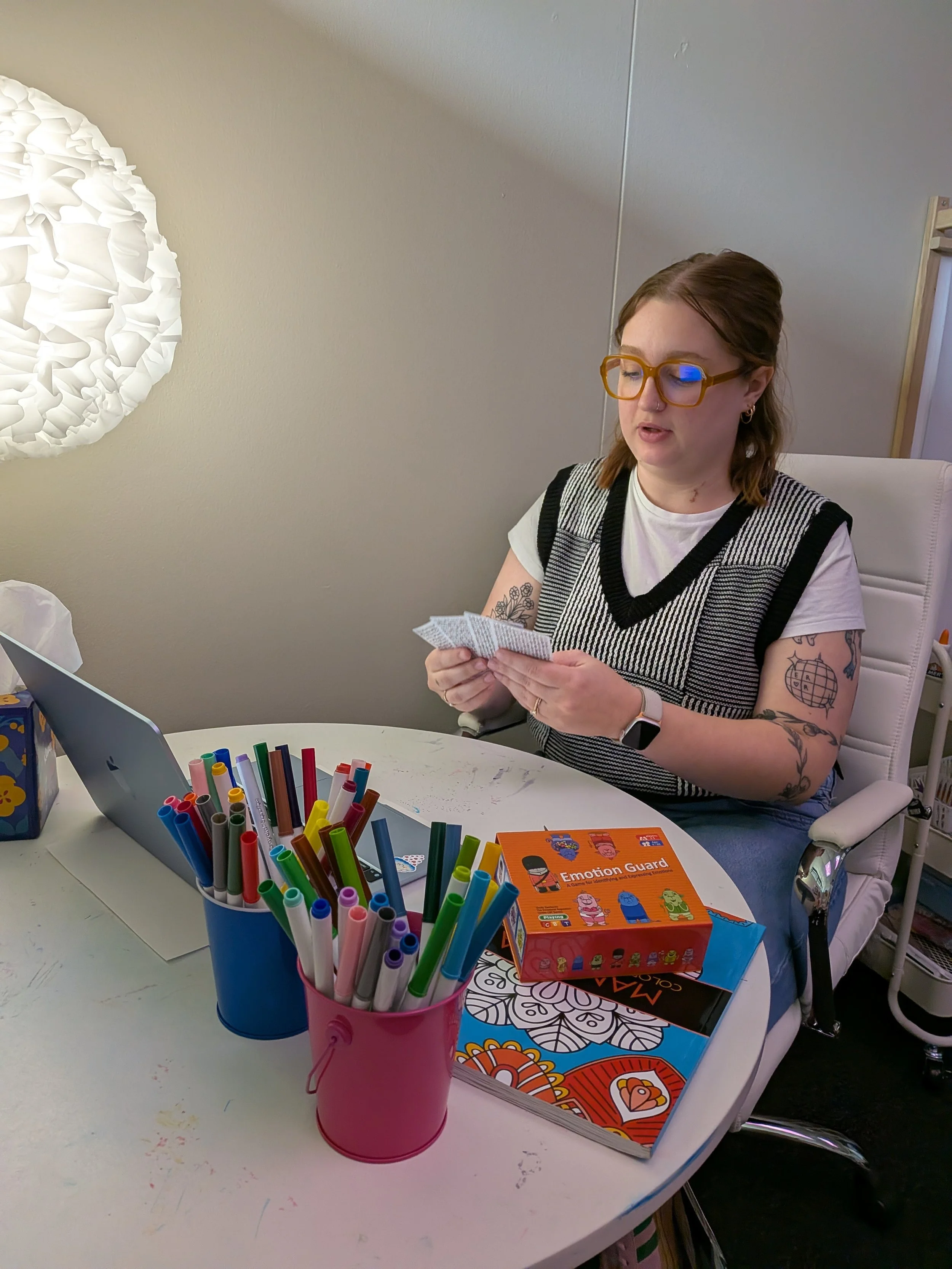
We don’t expect kids to just sit and talk on a screen. Our therapists use creative, play-based and interactive approaches—even in virtual sessions—to help kids stay engaged and express themselves in ways that feel natural.
Our goal is to help your child:
feel understood and supported
learn how to manage anxiety and big emotions
build confidence and coping skills
begin to open up at their own pace
What we help with:
Anxiety
School Refusal
Social Anxiety
ADHD
Depression
Big Emotions/meltdowns
Life transitions
Neurodivergent support
Self Esteem
Anger
We take a neurodivergent-affirming approach, meaning we support your child in understanding themselves—not trying to “fix” who they are.
Virtual therapy tends to work best for tweens and teens who can engage independently.
For younger children, we may recommend parent-supported sessions or in-person play therapy when possible.
Does virtual therapy actually work for kids and teens?
Yes—especially for this age group.
Tweens and teens are often more comfortable in their own space. Being at home can lower anxiety and make it easier for them to engage.
And because we use creative, interactive approaches, sessions don’t feel like sitting still and answering questions. We meet your child in a way that feels natural and engaging.
Our Approach: More Than Just Talking
Therapy with kids and teens doesn’t have to mean sitting still and answering questions.
Our therapists use:
Cognitive behavioral therapy (CBT), Acceptance and Commitment Therapy (ACT), Solution Focused Brief Therapy (SFBT), Exposure and Response Prevention (ERP) and more
play-based techniques
creative expression (drawing, games, activities, interactive tools)
age-appropriate conversation and skill-building
This helps kids:
stay engaged
feel less pressure
express things they may not have words for yet
Even in virtual sessions, we create a space that feels interactive, supportive, and tailored to your child.
This is especially helpful for kids who are anxious, neurodivergent, or hesitant to open up.
What to expect in Your First Online Therapy Session:
Getting started with virtual therapy can feel like a lot of unknowns, especially if your teen has never been to therapy before, or if you're not sure how it's going to work on a screen. Here's what the process actually looks like at Reach Counseling, from that very first session forward.
Before your first session, you'll receive a link. About 30 minutes before your appointment, you'll get a secure link to connect through our HIPAA-compliant telehealth system. We recommend logging in a few minutes early just to make sure everything is working. You don't need a special app or platform. A laptop, tablet, or phone all work.
The first session is called the intake, and we want parents there. You and your tween or teen will join together for that first appointment. We'll go through all the paperwork and consents, talk through what to expect, and start building a relationship with your child. We'll work with both of you to talk through what's been going on and develop goals that actually fit your family. It's collaborative from the very beginning.
After that, the sessions belong to your teen. Ongoing sessions are about 55 minutes, and it's just your child and their therapist — in whatever private space works best for them, whether that's their bedroom or a quiet corner of the house. (It doesn't have to be perfect. It just needs to be theirs.) Your therapist will always have your contact information and will reach out proactively if there's ever a concern. Most families do a parent check-in around the fourth session, and you can always request one at any point along the way.
And if you're wondering whether your teen will actually open up on a screen... that's one of the most common things parents ask us. Honestly? A lot of teens find it easier. There's something about being in their own space, on their own terms, that lowers the wall a little. We've seen kids who sat stone-faced in an office chair start talking when they were in a familiar environment.

Do We Accept Insurance?
We know cost is a real concern when you're looking for help for your child. That's why we work hard to make therapy as accessible as possible.
Reach Counseling is in-network with:
Blue Cross Blue Shield
Aetna, Meritain
United Healthcare/Optum/UMR
Many families pay only their copay, often $15-$30 per session.
Not sure if your plan is covered? We're happy to help you check your benefits before you commit to anything.
Is Online Therapy Right for My Teen?
It's a fair question. And honestly, it's one we think every parent should ask before getting started.
The short answer is: for most tweens and teens, yes. In fact, there are some kids who do better in a virtual setting than they ever would sitting across from a therapist in an office. We see this most often with kids who struggle with anxiety or social anxiety. Kids for whom leaving the house, driving somewhere new, and sitting in a waiting room is its own kind of hard. When therapy happens in their bedroom or their favorite chair, that barrier disappears. They're already in a space where they feel safe. That comfort can actually help them open up faster.
Our therapists are trained in play-based and activity-driven approaches specifically designed to keep kids engaged, so a virtual session at Reach doesn't look like two people staring at each other on a screen for 55 minutes. There's structure, there's interaction, and there's real connection. We've seen genuine rapport built through a laptop camera more times than we can count.
That said, we want to be upfront with you: virtual therapy isn't the perfect fit for every child, and we'll always be honest with you if we think something else might serve your teen better. One thing worth knowing going in is that kids who have a harder time maintaining focus tend to do best when the environment is set up to support them. That means finding a quiet, private space and putting the phone, the games, and anything else competing for their attention out of reach. It sounds simple, and it is. It just takes a little intention.
If you're not sure whether virtual is the right starting point for your family, reach out and we can talk it through together. That's what we're here for.

What makes Reach Counseling different
Not all therapists are trained to work with kids and teens. This is our specialty.
Our clinical director is a Registered Play Therapist Supervisor (RPT-S) and Licensed Professional Counselor Supervisor, two of the highest credentials in the field of child and teen therapy. This means your child isn't just seeing a general therapist who occasionally works with kids. They're getting care from a team that is specifically trained, supervised, and dedicated to this age group.
At Reach Counseling, we:
are trained in play therapy and child-centered approaches
use creative, play-based techniques to keep kids engaged
support neurodivergent kids in a respectful, affirming way
focus on building connection, not forcing conversation
We understand that when a child feels safe, that’s when real progress begins.

Ready to get your child the support they need?
Schedule a consultation and we’ll help you take the next step.
Schedule an Appointment
We’ll learn more about your child and your concerns
Match you with the right support and schedule your first session
We’re here to support your child—and your family—every step of the way.
FAQs
-
Yes, we are currently in-network with Blue Cross Blue Shield, Aetna, and United Healthcare. Most of our therapists are in-network, and we’ll help guide you through your options and match your child with the best available fit based on your needs and coverage.
-
Virtual therapy sessions take place through a secure video platform. Your teen meets one-on-one with their therapist, just like an in-person session—just from the comfort of home. We use conversation, interactive tools, and creative approaches to keep sessions engaging and effective.
-
Yes—virtual therapy works especially well for this age group. Many tweens and teens feel more comfortable opening up in their own space. Being at home can reduce anxiety and help them engage more naturally in the process.
-
Determining if your teen needs therapy can depend on several factors. Look for signs such as persistent changes in behavior, declining academic performance, withdrawal from social activities, intense mood swings, or difficulties managing emotions. Trust your instincts as a parent, and if you have concerns about your teen's well-being, reach out for help.
-
Yes—parent involvement is an important part of the process. Depending on your child’s age and needs, we may check in with you regularly through parent consultations, offer guidance, and help you support your child outside of sessions.
-
That’s completely okay—and very common. We focus first on building trust and connection. There’s no pressure to open up right away. Over time, most kids begin to feel more comfortable and willing to engage.
-
Virtual therapy tends to work best for tweens and teens (around ages 10+) who can engage independently. If your child is younger, we may recommend parent-supported sessions or in-person play therapy when possible.