
How to Support Teens with Social Anxiety
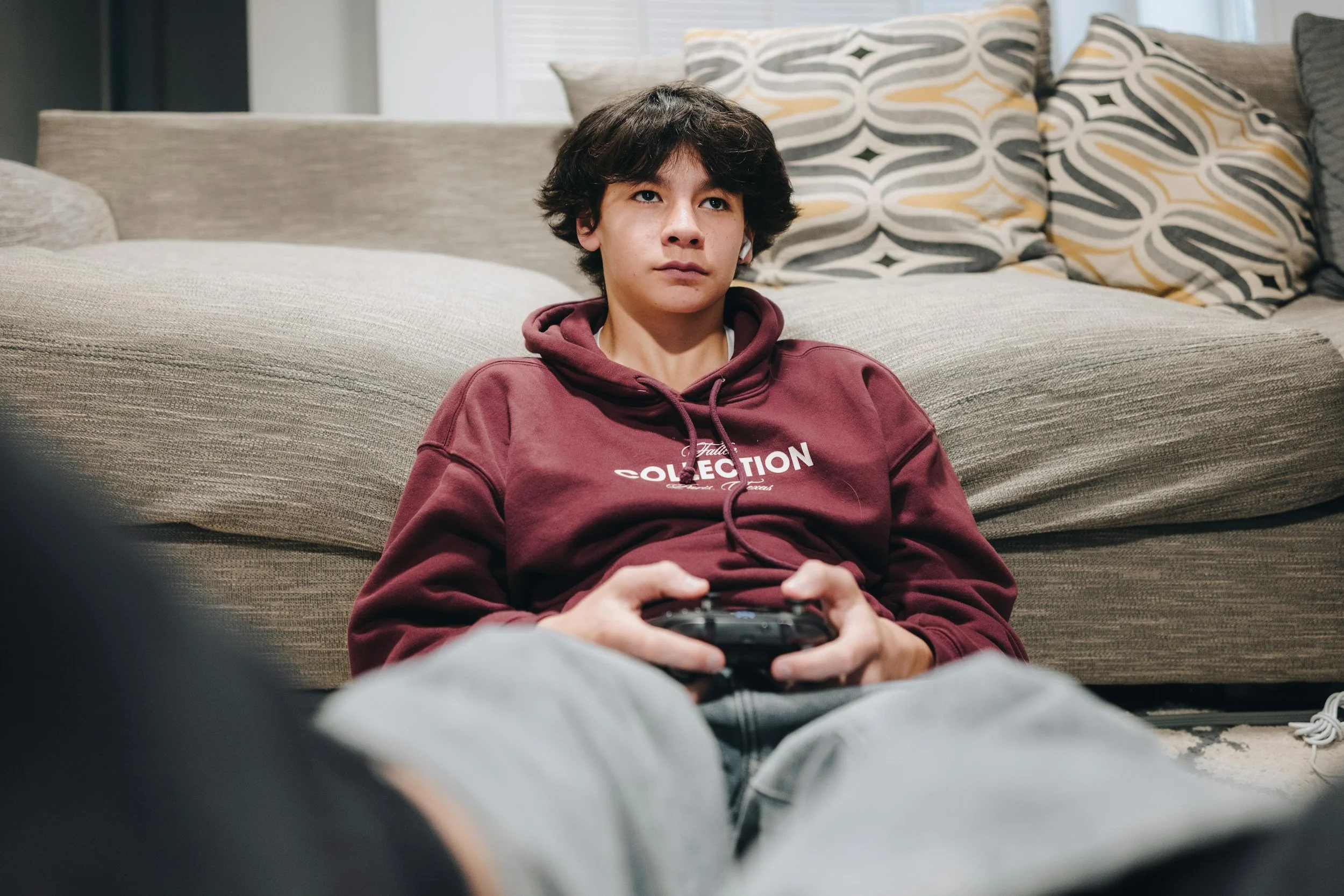
If you've watched your teenager freeze up before a group project, dodge a friend's text for the third day in a row, or go completely silent at family gatherings, you've probably already asked yourself the question that brought you here: how to help a teen with social anxiety when it feels like they're pulling further away every day. I want to start by saying this clearly: you are not necessarily doing anything wrong, and your teen isn't either. Social anxiety is one of the most common things I see walk through my office door, and there's a lot parents can do to help, even before therapy ever enters the picture. If you're wondering whether therapy might help, our post on what teen counseling actually looks like is a good place to start.
What Social Anxiety Actually Looks Like in Teens
In session, social anxiety rarely looks like a teen announcing "I'm anxious." More often it looks like hesitancy to open up. Fidgeting. Fewer words than usual. A quiet, steady avoidance of anything that feels emotionally risky. I see some degree of social anxiety or social phobia in a large number of the teens I work with, and it makes sense when you think about what's actually being asked of them. Adolescence is one long string of novel, high-stakes situations: new schools, first jobs, driving, shifting friend groups, figuring out who they even are. A lot of that anxiety is tied to things genuinely outside their control, which makes it harder to reason or cope your way through. If some of this sounds familiar but the picture feels bigger than just social situations, our guide on helping a teenager with anxiety digs into the broader picture.
One tool that helps in both the therapy room and at home is simply having fidgets available. Something for hands to do can give anxious energy a physical place to go instead of building up with nowhere to release.
It's Not Just About School Friends
Here's something I wish more parents heard: social anxiety in teens is often assumed to be purely about peer interactions at school, and that's only part of the picture. Personality, temperament, peer relationships, family dynamics, teachers, exercise, diet, and sleep are all major contributors to a teen's overall confidence level. Taking a more holistic approach to supporting your child, rather than zeroing in only on the social piece, tends to be far more effective. Peer relationships today also live largely online, and it's worth taking a look at how social media affects teen mental health if you're trying to piece together the full picture of what's driving your teen's anxiety.
The Overlooked Factors That Shape Confidence
Some of the most overlooked pieces are also some of the simplest: healthy amounts of sleep, enough physical movement, regular time outside, and a reasonably balanced diet. None of these will fix social anxiety on their own. But they build the baseline a teen's nervous system needs in order to have any capacity left for the harder work of facing social discomfort. Strong executive functioning skills play a role here too, since a teen who feels more in control of their day-to-day routine often has more bandwidth left over for social challenges.
Why Silence Doesn't Mean It's Not Working
Parents sometimes worry that if their teen isn't talking, therapy (or any support, really) must not be working. I want to gently push back on that. I've had sessions with teens who didn't say a single word the entire time. Their nervous system was heightened enough that they shut down and froze completely. If you've ever watched your child go quiet in a social situation and felt panic rise in your own chest, you are not alone in that either.
When a client isn't speaking, therapists don't stop working. We keep engaging through play, art, and by reflecting feelings back to them, even without much verbal exchange. Rapport has to be built before a teen will trust an adult, even a helpful one, and that trust takes time. Therapy is a process. It cannot be rushed, and healing rarely moves in a straight line.
What's easy to miss from the outside is how hard a socially anxious teen is actually working, even when nothing visible seems to be happening. A hyperactivated nervous system is exhausting to carry around all day. Exposure to discomfort, even small doses of it, is genuinely hard work. I encourage you to give your teen credit for the effort you can't see. That effort can also show up as moodiness at home, and if that's a piece of your puzzle too, our tips for handling a moody teen might be a helpful companion read.
What Actually Helps
If you're reading this at 11pm, feeling stuck and worried, here's what I'd tell you: you are not alone in this, and there are supportive spaces for your child that might feel more manageable than jumping straight into a big social leap. Social skills groups, clubs, structured activities, therapy, and even virtual connection all offer exposure to social interaction in ways that can feel safer than the deep end.
Gradually increasing exposure to social situations, paired with concrete emotional regulation tools (breathing, grounding, fidgets, whatever works for your specific kid) tends to help over time. It is a process. We all wish we could snap our fingers or wave a magic wand and have it be over. It doesn't work that way. But with the right support, consistency, and patience, teens do build confidence.
If you're not sure where to start, we'd love to help you figure that out. You can call or text us at (682) 593-1402, or fill out the contact form on our website. We'd love to come alongside your family. We work with kids, teens, and adults at our Keller, Texas office, and we also see kids and teens throughout the state of Texas virtually.

Riley Corder, M.S., LPC-Associate supervised by Carrie Manning, LPC-S
Riley specializes in working with young people (ages 3+) as well as adults using individual and group therapy.