
With the holidays approaching, finding a gift a child will genuinely enjoy can feel like a challenge. If you're searching for screen-free gift ideas for neurodivergent kids that will hold their interest beyond the first few minutes, it helps to look past the latest trends and think about what makes that child light up.
For neurodivergent children and teens, including those with autism, ADHD, sensory processing differences, and other developmental differences, the best gifts aren't necessarily the most expensive or the ones with the most bells and whistles. They're the ones that reflect a child's interests, sensory preferences, support needs, and way of engaging with the world. (And if the season itself already feels like a lot, our guide on how to help your autistic child during the holidays has ideas for keeping things a little calmer.)
Some children love hands-on activities. Others gravitate toward movement, imaginative play, building, repetition, music, or exploring a favorite topic in depth. Screens can have a place in family life, and we're not here to say otherwise. But if meltdowns when screen time ends are a regular part of your evenings, having a few engaging screen-free options ready can make those transitions feel softer. There are plenty of meaningful ways to encourage creativity, connection, regulation, and independence without relying on screens.
The goal isn't to find a toy that makes a child play a certain way. It's to find something that invites them to explore, create, feel comfortable, and enjoy being themselves. Here are ideas for toddlers through teens.
Screen-Free Gift Ideas for Younger Neurodivergent Kids
1. Sensory Play Kits
Sensory play gives children opportunities to explore materials through touch, sight, movement, and sound. A simple basket of open-ended materials can be just as engaging as a highly specialized toy.
Kinetic sand with scoops, molds, and small construction vehicles
Play-Doh or homemade play dough
Scoops, funnels, cups, and containers for supervised sensory play
Textured fidgets and sensory balls
Water-painting books or reusable water-reveal activities
Age-appropriate sensory bins using materials your child can safely explore
Why kids may love it: Sensory play offers exploration without requiring one correct outcome. Children can repeat an activity, experiment with materials, and participate at their own pace.
Caregiver tip: Notice what your child seeks out and what they avoid. Some children enjoy messy textures, while others prefer dry, predictable materials. Consider choking risks, allergies, mouthing, and supervision. Avoid water beads, especially around young children.
2. Building Toys That Encourage Creativity
For children who enjoy constructing, organizing, or figuring out how things work, building toys can offer hours of open-ended engagement.
Magnetic building tiles
LEGO or other interlocking construction sets
Wooden blocks
Age-appropriate marble runs
Fort-building kits
Model-building sets for older children and teens
Why kids may love it: Building can encourage problem-solving, spatial reasoning, creativity, and persistence. It can also create natural opportunities to work through the frustration of a structure that doesn't turn out as expected.
Let your child build their own version instead of expecting the finished project to look exactly like the picture on the box. The freedom to do it differently is part of the fun.
3. Movement-Based Gifts for Busy Bodies
Some children learn, explore, and regulate through movement. For kids who enjoy jumping, climbing, balancing, or moving throughout the day, consider gifts that encourage safe physical activity.
Indoor stepping stones or balance paths
Balance boards
Mini trampolines with appropriate safety features and supervision
Pop-up tunnels
Child-friendly obstacle course kits
Yoga or movement cards
Outdoor sports or movement equipment that matches their interests
Why kids may love it: Movement activities offer opportunities for gross motor practice, coordination, body awareness, and physical exploration.
Rather than expecting children to sit still for every activity, consider whether movement breaks can help them stay comfortable and engaged.
4. Pretend Play and Imaginative Play Sets
Pretend play can be a fun way for children to explore everyday experiences, create stories, and connect with others. Follow the child's interests, whether that's running a restaurant, caring for stuffed animals, or inventing an imaginary world.
Pretend grocery store or cash register
Doctor, veterinarian, or tool kits
Dollhouses and miniature figures
Play kitchens
Puppets and puppet theaters
Dress-up clothes and costumes
Why kids may love it: Imaginative play can create opportunities for expression, communication, and exploring different roles or experiences.
You don't have to direct the play. If your child wants to play restaurant for the twentieth time, grab a pretend menu and enjoy being the customer. (Following a child's lead like this is a big part of how play therapy helps kids feel seen and understood.)
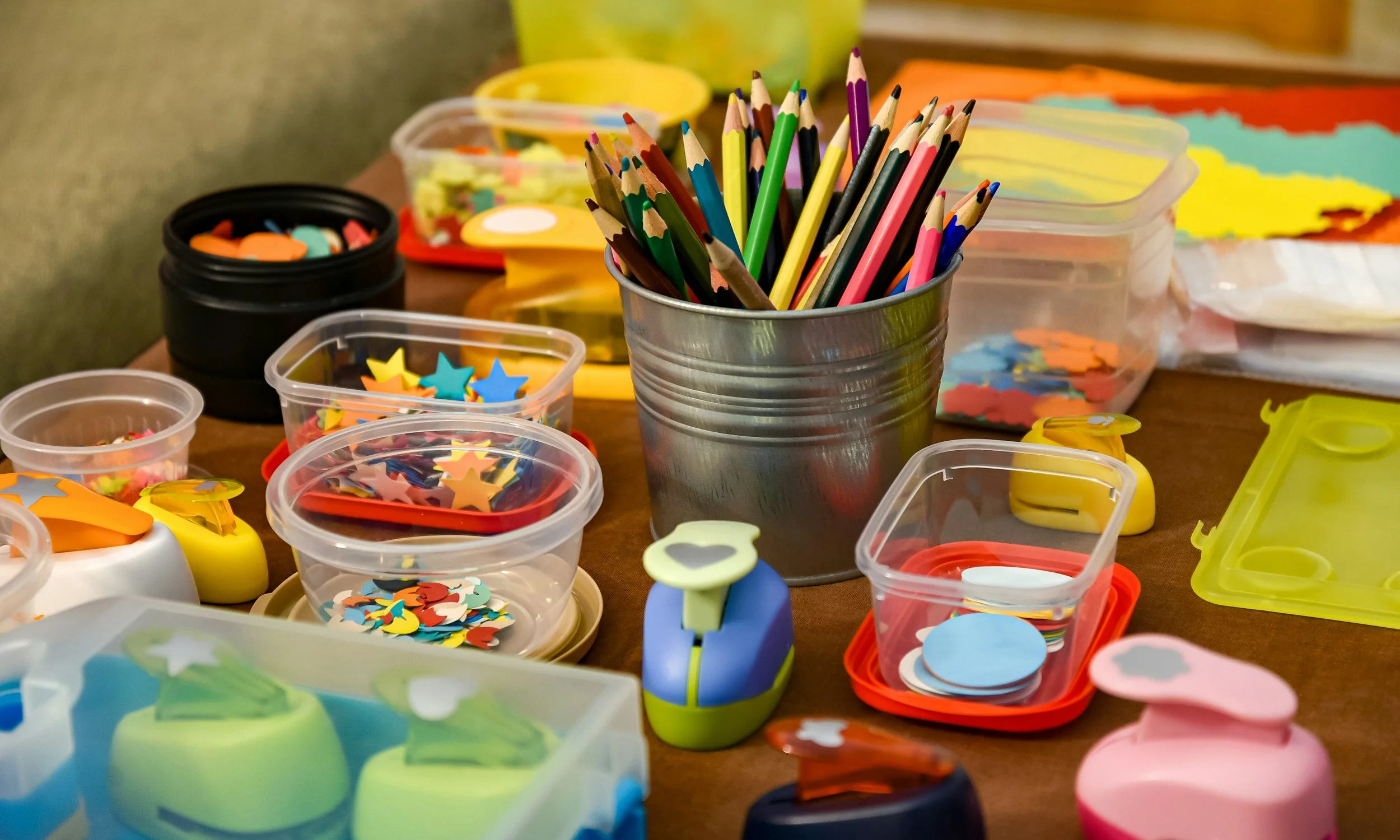
5. Art Supplies for Creative Expression
Art can offer another way for children to communicate ideas, explore materials, and express themselves. Keep supplies accessible and choose options that fit the child's interests and sensory preferences.
Washable markers, crayons, and colored pencils
Watercolor or washable paint sets
Air-dry clay
Sticker books and collage materials
Reusable drawing boards
Craft kits with flexible instructions
Age-appropriate scissors, paper, and mixed-media supplies
Why kids may love it: Art activities can support creativity, fine motor practice, decision-making, and self-expression.
Try open-ended invitations instead of projects that require an exact result. The goal is to enjoy the process, not to create a picture-perfect masterpiece.
6. Fidgets and Regulation Tools
Fidgets are not one-size-fits-all. Some children like squeezing, stretching, twisting, or manipulating objects. Others prefer a particular texture or a small item they can keep in a pocket.
Pop-it toys
Stretchy sensory toys
Textured fidget rings
Fidget cubes
Therapy putty or dough
Soft plush sensory toys
Tactile sensory balls
Why kids may love it: For some children, repetitive movement or tactile input can be useful during concentration, transitions, or overwhelming situations.
Fidgets are not rewards for good behavior, and they should not automatically be taken away when a child is expected to focus. For some children, having something to manipulate supports participation.
7. Books That Match Their Interests
Books don't have to be limited to bedtime. Look for topics your child already loves, whether that's dinosaurs, animals, space, fashion, sports, mysteries, or how things work.
Interactive lift-the-flap or tactile books
Nonfiction books about favorite topics
Search-and-find books
Graphic novels and illustrated series
Books with predictable patterns or repeated phrases
Social-emotional learning stories when they fit the child's needs and interests
Why kids may love it: Reading can support curiosity, language, shared enjoyment, and connection. Re-reading a favorite book can be comforting and enjoyable. Repetition is not a problem that needs fixing.
8. Games That Encourage Connection Without Pressure
Games can create opportunities for families and friends to spend time together while practicing skills such as turn-taking, flexible thinking, and problem-solving.
Matching games
Cooperative board games
Puzzles
Charades or guessing games adapted to the child's comfort
Movement-based card games
Magnetic travel games
Why kids may love it: Games can offer shared enjoyment and a predictable structure. Choose options that are developmentally appropriate and consider whether waiting, competition, or unexpected changes may be stressful.
Screen-Free Gift Ideas for Neurodivergent Tweens and Teens
9. Creative Hobbies
As children get older, their interests and preferences change. Tweens and teens deserve gifts that feel age-appropriate, respect their independence, and reflect what they actually enjoy. Creative hobby kits can invite exploration without making the activity feel like another assignment.
Crochet or beginner knitting kits
Jewelry-making and bead kits
Scrapbooking and journaling supplies
Paint-by-number kits
Air-dry clay or beginner pottery kits
Embroidery kits
DIY room décor projects
Adult coloring books and quality art supplies
Why teens may love it: Creative hobbies can provide opportunities for self-expression, independent exploration, and learning new skills without pressure to get everything right.
Let your teen choose the project and decide when they're finished. A relaxing hobby doesn't need to become a task to complete.
10. Sensory-Friendly Comfort Gifts
Sensory needs don't disappear as children grow. Many teens become more aware of the environments, textures, and experiences that help them feel comfortable. A gift that makes their personal space feel more welcoming can be meaningful.
Soft or oversized hoodies
Cozy blankets and pillows
Plushies or body pillows
Comfortable, sensory-friendly clothing
Blackout curtains
Adjustable ambient lighting
Soft bedding
Noise-reducing headphones or ear protection
Why teens may love it: Comfort-focused gifts can help teens personalize their space and have options for managing sensory input.
Ask about preferences before purchasing. What feels soothing to one teen may feel overwhelming to another. Check product fit and safety, and remember that noise-reducing headphones are not appropriate for every setting.
11. Puzzles, Strategy Games, and Brain Teasers
For teens who enjoy patterns, problem-solving, strategy, or working toward a specific goal, puzzles and games can be a satisfying screen-free option.
3D wooden puzzles
Rubik's cubes and other twisty puzzles
Jigsaw puzzles
Strategy board games
At-home escape-room or mystery games
Logic puzzle books
Model-building kits
Brain teaser collections
Why teens may love it: These activities can encourage planning, critical thinking, and perseverance while allowing teens to engage independently or with others.
Not every activity needs to be social. Enjoying a puzzle independently can be exactly what a teen wants.
12. Music and Hands-On Creative Experiences
For teens who gravitate toward music, consider gifts that let them explore sound and creativity without needing a screen.
Beginner ukulele, guitar, or keyboard
Music journals or songwriting notebooks
Karaoke microphone
Beginner percussion instruments
Vinyl records and a record player
DIY instrument kits
Music-themed art or room décor
Why teens may love it: Music-related activities can offer opportunities for creativity, self-expression, and developing new skills. A teen doesn't have to become a musician to enjoy exploring music.
13. Independent Living and Real-World Skill Kits
Practical gifts can be meaningful when they connect to something a teen already enjoys. Think of these as invitations to explore independence, not reminders of what a teen needs to improve.
Beginner baking or cooking kits
Cooking utensils or an apron in a favorite style
Indoor gardening or plant propagation kits
Sewing and mending kits
DIY room organization supplies
Instant camera and photo album
Beginner budgeting planner
Simple home or craft repair kits
Why teens may love it: Hands-on activities can provide opportunities to practice sequencing, planning, and everyday skills in a way that feels relevant and enjoyable.
14. Movement and Outdoor Exploration
Movement and outdoor activities aren't just for younger children. Teens may enjoy opportunities to explore their surroundings, spend time outside, and find enjoyable ways to move.
Roller skates or skateboard with protective gear
Beginner hiking kit
Nature exploration journal or kit
Gardening supplies
Sports equipment that matches their interests
Badminton or pickleball set
Instant camera for outdoor photography
Hammock or age-appropriate camping accessories
Why teens may love it: These activities can offer opportunities for movement, exploration, confidence-building, and spending time outdoors. Follow the teen's interests rather than assuming every young person enjoys the same physical activities.
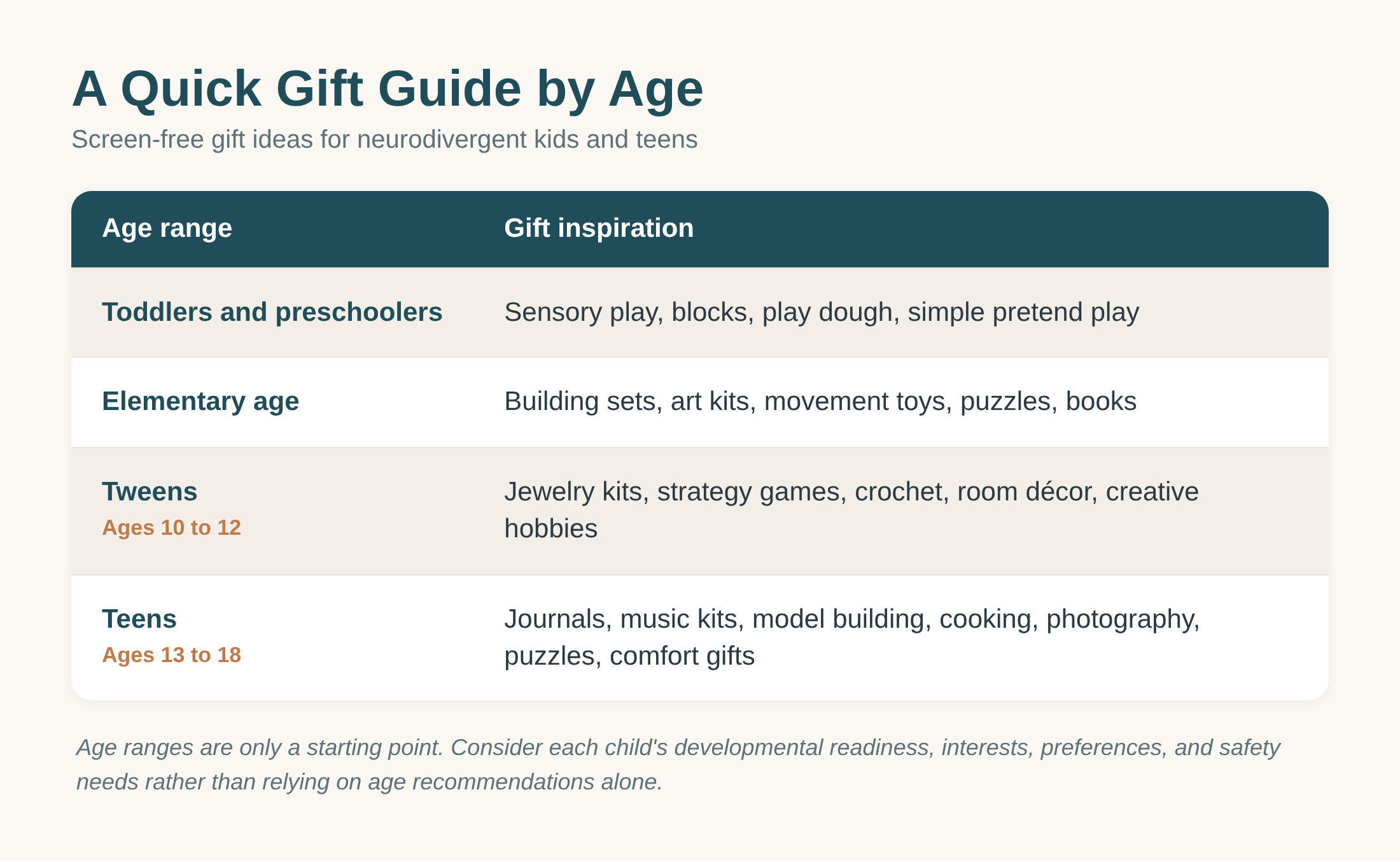
Before You Shop: Four Questions to Consider
What does my child naturally gravitate toward? Think about their interests, favorite activities, and the things they already enjoy.
What sensory experiences do they enjoy or avoid? Consider sounds, textures, lights, movement, and other sensory input.
Does this gift allow flexibility? Open-ended gifts can give children room to explore in their own way.
Does it fit my child's current needs and preferences? Consider developmental readiness, accessibility, safety, and whether the child has expressed interest.
The Best Gift Isn't Always Something You Can Wrap
There is no single toy or activity that works for every neurodivergent child. A child with autism may love pretend play. A child with ADHD may enjoy puzzles. A teen may still find comfort in a favorite plushie, and a younger child may prefer building the same structure again and again.
There is no expiration date on comfort, creativity, or play.
As caregivers, we don't need to turn every moment of play into a lesson. Sometimes the most meaningful thing we can do is sit nearby, follow a child's lead, and let them show us what makes them happy. (If you want more on that mindset, we share practical ideas for parenting neurodivergent children day to day, not just during the holidays.)
This holiday season, instead of asking, "What toy will keep my child busy?" try asking, "What gift will allow my child to be themselves?" The best screen-free gift ideas for neurodivergent kids start right there.
Neurodivergent children and teens don't need gifts that change who they are. They deserve gifts that celebrate who they already are.
How Reach Counseling Supports Neurodivergent Kids and Families
This guide was written from the same neurodivergent-affirming, play-based perspective we bring to our work every day. At Reach Counseling, our neurodivergent-affirming counseling starts with who your child already is, not who they "should" be. If you're wondering what that actually looks like in a session, we break it down in our post on neurodivergent-affirming therapy in Keller, TX.
We see families in Fort Worth and Keller, and offer virtual sessions across Texas. If you're not sure where to start, we'd love to help you figure that out. Reach out to our team anytime.
Every child is different. These suggestions are intended as inspiration, not a one-size-fits-all recommendation. Choose products that are age-appropriate, safe for the individual child, and aligned with their interests and support needs.

Andrea Acosta, M.S., LPC-Associate, NCC, CAS
Andrea is a bilingual (English/Spanish) Certified Autism Specialist who believes connection is at the heart of healing. She works with children as young as 3 and their families through play, expressive arts, and evidence-based approaches, and especially loves supporting autistic kids and children working through big emotions.