
Helping Children Build Empathy and Kindness in Today’s World

Many parents today are asking the same heartfelt questions:
Why does my child struggle with empathy?
Why does kindness seem harder for kids right now?
How can I help my child care about others while managing such big emotions of their own?
Children are growing up in a world that often feels fast, loud, and emotionally overwhelming. They are surrounded by stress through school expectations, social media, peer dynamics, and even the adult conversations happening around them. While children are naturally resilient, they are still learning how to understand and regulate their own emotions, let alone recognize and respond to the feelings of others.
Social media in particular can shape how children relate to others in ways that are not always positive. Read more in The Impact of Social Media on Teen Health.
The encouraging news is this: empathy and kindness are skills that can be learned. With consistent support, gentle guidance, and opportunities to practice, children can grow in their ability to recognize emotions, connect with others, and respond with compassion.
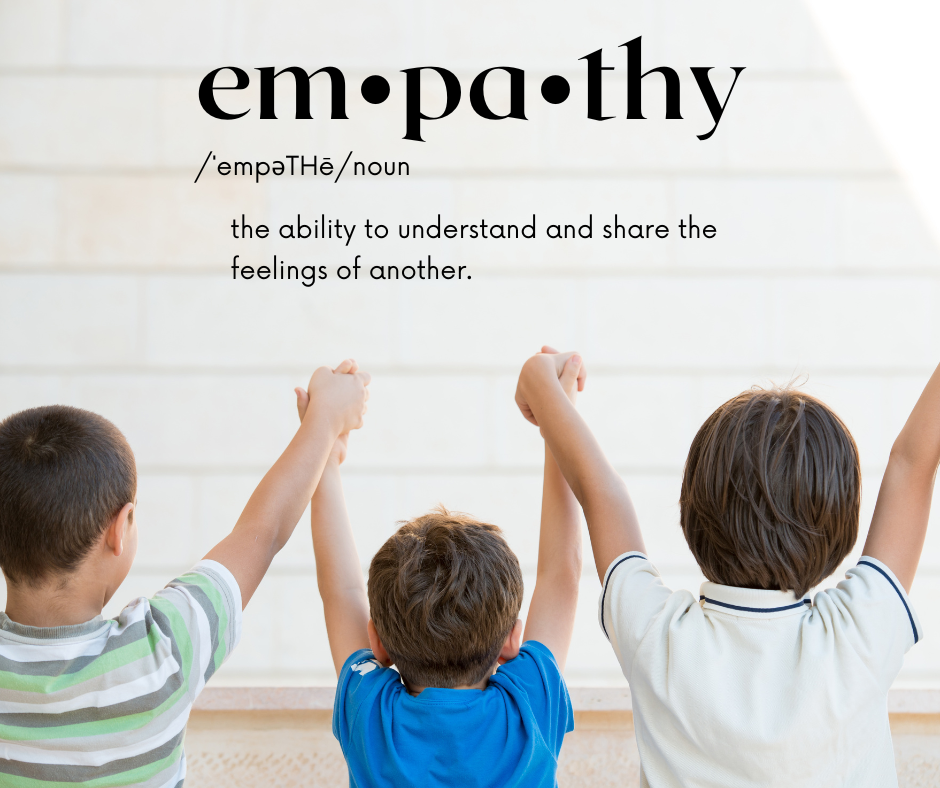
Why Empathy Can Feel Hard for Children Right Now
Empathy involves several important developmental abilities. A child must notice emotions, pause their own reactions, and imagine another person’s experience. That is a big and complex task for a developing brain.
When children struggle with empathy, it is often because they feel overwhelmed, emotionally dysregulated, or unsure how to express feelings safely. Stress, changes in routine, anxiety, attention difficulties, and major life transitions can all make kindness feel more difficult for children.
Behavior that looks unkind is often a sign that a child needs more support, not more punishment. For practical tools to help in those hard moments, read How to Help Your Child Calm Down: Effective Behavior and Coping Strategies.
Start With Emotional Awareness
Before children can offer empathy to others, they need support in understanding themselves.
Parents and caregivers can nurture emotional awareness by:
Naming emotions out loud, such as sad, frustrated, or disappointed
Letting children know that all feelings are okay, even the hard or uncomfortable ones
Helping children find words for feelings instead of expressing them through behavior
Children who can identify and talk about their own emotions are more likely to recognize emotions in others and respond with empathy. One of the most powerful ways to support this is through co-regulation. Read The Power of Co-Regulation to learn how your calm presence helps your child develop emotional awareness.

Model Empathy and Kindness at Home
Children learn empathy by watching the adults around them. Everyday interactions matter more than we realize.
You can model empathy by:
Apologizing when you make a mistake
Speaking respectfully about others, even during moments of disagreement
Showing patience and compassion toward yourself, not just your child
Repairing after conflict is especially powerful. When adults acknowledge mistakes and reconnect, children learn that kindness includes both accountability and care.
“Children learn empathy not from perfection, but from repair.”
Use Everyday Moments to Teach Empathy
Empathy is best learned through real-life moments, not lectures.
Gentle, curiosity-based questions can help, such as:
How do you think that made them feel?
What do you think they might need right now?
How would you feel if that happened to you?
For tweens especially, empathy is put to the test in friendships. Helping Your Tween Navigate Friendship Challenges offers guidance for some of the trickier social situations your child may face.
Books, movies, TV shows, and pretend play offer powerful opportunities to build empathy in ways that feel natural and engaging for children. Exploring characters’ thoughts, feelings, and choices allows kids to practice perspective-taking in a safe, low-pressure way. Below are some of our favorite resources for supporting empathy and kindness at home through everyday stories and play.
-
Books
The Rabbit Listened by Cori Doerrfeld – A gentle story about listening, patience, and comforting others.
Have You Filled a Bucket Today? by Carol McCloud – Introduces simple acts of kindness and emotional awareness.
Movies
Inside Out – Teaches children about recognizing emotions and the importance of every feeling.
Paddington – Encourages kindness, understanding, and empathy toward others.
TV Shows
Daniel Tiger’s Neighborhood – Teaches social-emotional skills and empathy through relatable scenarios.
Bluey – Explores sharing, cooperation, and understanding others’ feelings in family and play situations.
-
Books
Last Stop on Market Street by Matt de la Peña – Explores gratitude, perspective-taking, and noticing the beauty in others’ experiences.
Each Kindness by Jacqueline Woodson – Highlights the impact of small acts of kindness and thoughtful choices.
Movies
Finding Dory – Encourages patience, empathy, and understanding differences in abilities and memory.
Zootopia – Explores prejudice, empathy, and understanding others’ perspectives in a fun, accessible way.
TV Shows
Wild Kratts – Encourages caring for animals and understanding their needs in engaging ways.
My Little Pony: Friendship Is Magic – Focuses on empathy, cooperation, and emotional problem-solving.
-
Books
Wonder by R.J. Palacio – A moving story about inclusion, kindness, and seeing the world from multiple perspectives.
Out of My Mind by Sharon M. Draper – Helps children understand and empathize with peers who have different abilities.
Movies
Luca – Explores friendship, identity, and understanding fears or differences in others.
The Mitchells vs. the Machines – A fun story that highlights family connection, repair, and perspective-taking.
TV Shows
Anne with an E – Encourages empathy, understanding social differences, and kindness toward others.
Carmen Sandiego – Combines adventure with moral reasoning, helping tweens think critically about actions and their impact on others.
-
Books
The Hate U Give by Angie Thomas – Explores social justice, perspective-taking, and empathy for experiences different from one’s own.
Wonder (R.J. Palacio) – Still relevant for older teens; reinforces kindness, inclusion, and seeing others’ struggles.
Movies
The Pursuit of Happyness – Highlights resilience, compassion, and understanding challenges faced by others.
To All the Boys I’ve Loved Before – Explores emotional vulnerability, understanding others’ feelings, and navigating relationships.
TV Shows
Anne with an E – Continues to resonate with teens about empathy, social awareness, and moral courage.
Heartstopper – Focuses on empathy, emotional connection, and understanding diverse identities and experiences.
Encourage Kindness Without Forcing It
It is natural to want children to apologize or “be kind” right away, but forced responses do not always lead to genuine empathy.
Instead, focus on understanding and repair by saying:
Something happened there. Let’s figure out what might help.
What could we do to make this situation better?