
Does My Child Have to Talk in Play Therapy?
"Does my child have to talk in play therapy?" I get some version of this question from almost every parent before their child's first session. It's a great question, and the short answer is no. But the longer answer says a lot about how play therapy actually works, and why it's different from talk therapy in ways that matter for kids.
Is Play Therapy the Same as Talk Therapy?
Not exactly. Talk therapy relies on a client being able to identify, name, and explain their emotions out loud. That works well for a lot of adults and older teens, but it asks a lot of a young child who may not have the words yet, or who is simply too nervous to use them with someone new. Among the many types of therapy for kids, play therapy stands out because it doesn't require a child to talk in order to make progress.
In my practice, it's common for kids not to talk during sessions, especially early on. Talking to a stranger about big emotions can feel genuinely scary for a child. Over time, once the counselor and the playroom start to feel safe, most kids open up on their own. But there is never any pressure to talk in the playroom. Sometimes a safe place to play, without the expectation of performing conversation, is exactly what a child needs.
What Do Kids Do in Play Therapy?
This is usually the next question parents ask, and it makes sense. So what do kids actually do in play therapy if they're not talking?
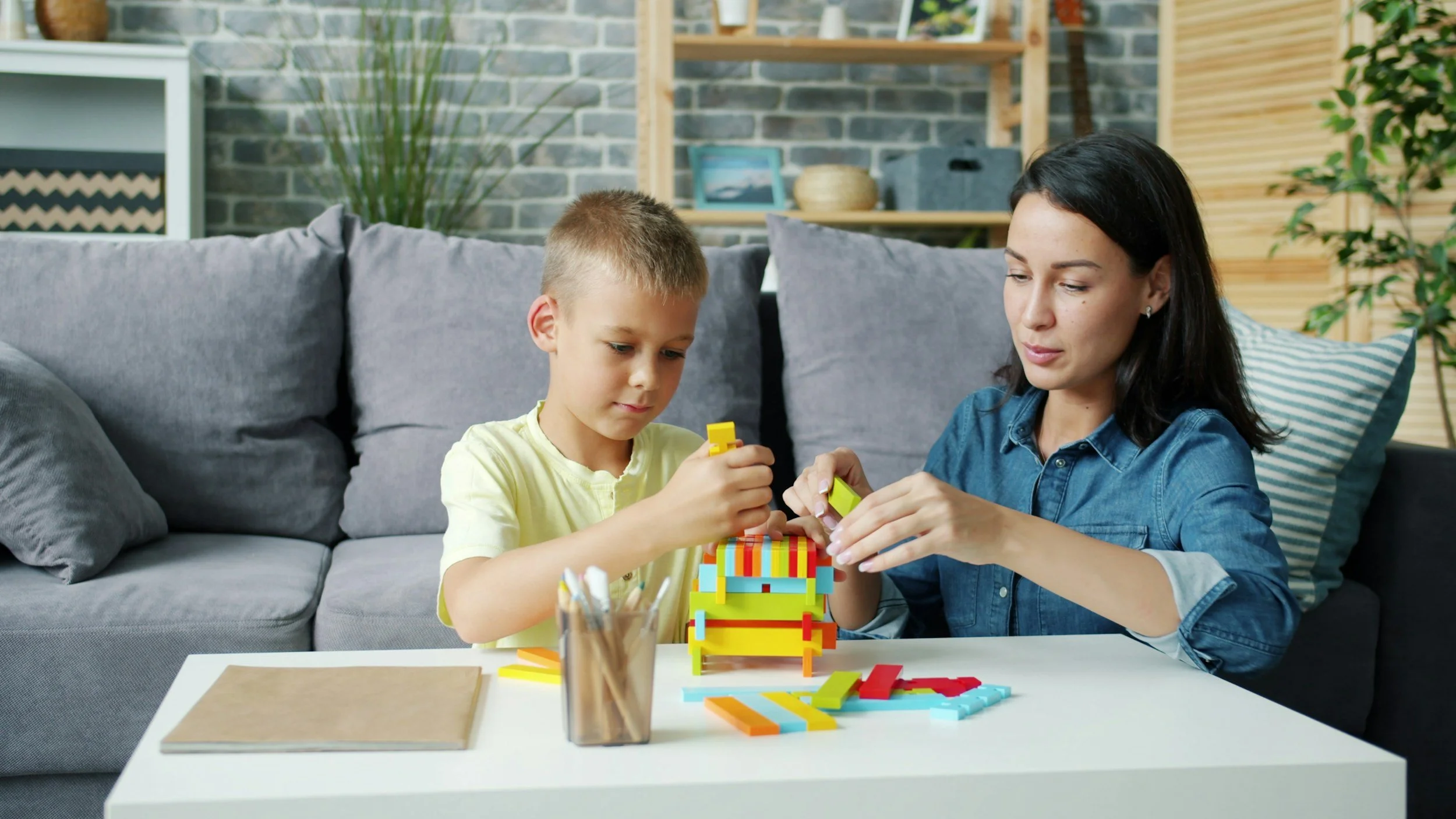
They play. They build, they act out scenes with toys and stuffed animals, they choose games, they move around a room designed to give them options. And through all of that, I'm watching, reflecting feelings back to them, and noticing what their play is communicating, even when no words are involved. Therapy isn't meant to be forceful, and growth and healing can't be forced either. Some kids are also naturally more introverted or quiet by nature, and the goal of therapy was never to change a child's personality. My job is to help kids feel confident being their authentic selves, inside and outside of session. If a client's authentic self is quiet, I'm not going to coerce them into being someone they're not.
A Client Who Didn't Speak for Two Months
I once worked with a client who didn't speak for two full months after we started sessions. Honestly, I was surprised by how much progress happened without a single word being said. I kept reflecting the feelings and actions I noticed in that client, even when there was no response back. That approach also teaches kids something important: they don't have to act a certain way to be liked or accepted.
Eventually, that client began sharing small, lighthearted things, school, hobbies, that kind of thing. Over time, we moved into deeper topics and real struggles. Even now, we still have sessions where that client doesn't say much, and that's fine. Those quiet sessions can be just as powerful. Sometimes being quiet is exactly what the client needs that day.
The Nuance Most Parents Don't Hear
Here's something that often gets overlooked: talking, in play therapy, isn't primarily about teaching a specific skill. Most of what I say in a session is about building a safe relationship that communicates one thing clearly: I hear you, I understand you, I see all of you. My goal is for a client to feel, for that hour, like they are my top priority, because they genuinely are.
Once that's communicated, a client doesn't have to say anything back for me to fully accept them. If a child can feel connected without saying a word, that's a truly meaningful relationship, and it's often the relationship itself, not a specific conversation, that drives change. This kind of steady, safe presence matters just as much for kids navigating other differences, like neurodivergent kids working through how they show up socially.
The Biggest Misconception: Silence Means No Progress
A lot of parents worry that if their child isn't talking in play therapy, nothing is happening. In reality, the safe relationship between a child and their counselor is the real driver of growth, change, and healing. Progress can absolutely happen without a client ever saying a word.
Pushing a child to talk before they're ready tends to backfire. It can push a child toward masking, covering their true self just to meet an expectation, rather than actually working through what's underneath. Play therapy typically unfolds in its own rhythm, moving through recognizable stages as trust builds, and that process can't be rushed just because a parent (understandably) wants to see faster proof of progress.
If You're Reading This at 11pm, Feeling Stuck
If you're feeling stuck tonight, know that it's completely common for kids to shut down, feel shy, or avoid opening up to someone new. Play therapy is a unique kind of relationship, and it takes time to build the safety a child needs before words come easily, if they come at all.
Also know that play therapy can genuinely help build the confidence and social skills a child needs for speaking up in other situations over time. And your child isn't necessarily shutting down by being quiet. Maybe they're just being themselves. Pushing a child in a certain direction usually just creates more internal dissonance. Feeling authentic, even quietly authentic, is liberating at any age.
If you're unsure whether what you're seeing at home is a normal phase or something worth looking into further, it may help to think through when it's time to see a counselor in the first place.
Reach Out Anytime
If you're wondering whether play therapy is the right fit for your child, even if they're not big talkers, we'd love to help you figure that out. You can call our office, fill out the contact form on our website, or send us an email, and someone from our team will get back to you to talk through what your child is going through and find the right next step together. You don't have to have it all figured out before you reach out. That's what we're here for.

Riley Corder, M.S., LPC-Associate supervised by Carrie Manning, LPC-S
Riley works with young people ages 3 and up, as well as adults, through individual and group therapy. He uses evidence-based play therapy approaches, including Child-Centered Play Therapy, to help kids build safety and trust in the therapy room, whether or not they're ready to put their feelings into words.